Why Games Teach Failure Better Than Almost Anything Else
By Xogos Gaming · October 12, 2026 · Games, Math, History, Curriculum

How Homeschool Parents Can Turn Mistakes Into Confidence, Resilience, and a Love of Learning

Why Is Losing a Game Fun, but Failing a Test Terrifying?
Have you ever watched your child play a video game, lose a level, and immediately try again? Sometimes they'll fail five, ten, or even twenty times before finally succeeding. Yet instead of throwing their hands in the air and declaring, "I'm terrible at this," they study what went wrong, change their strategy, and try again.
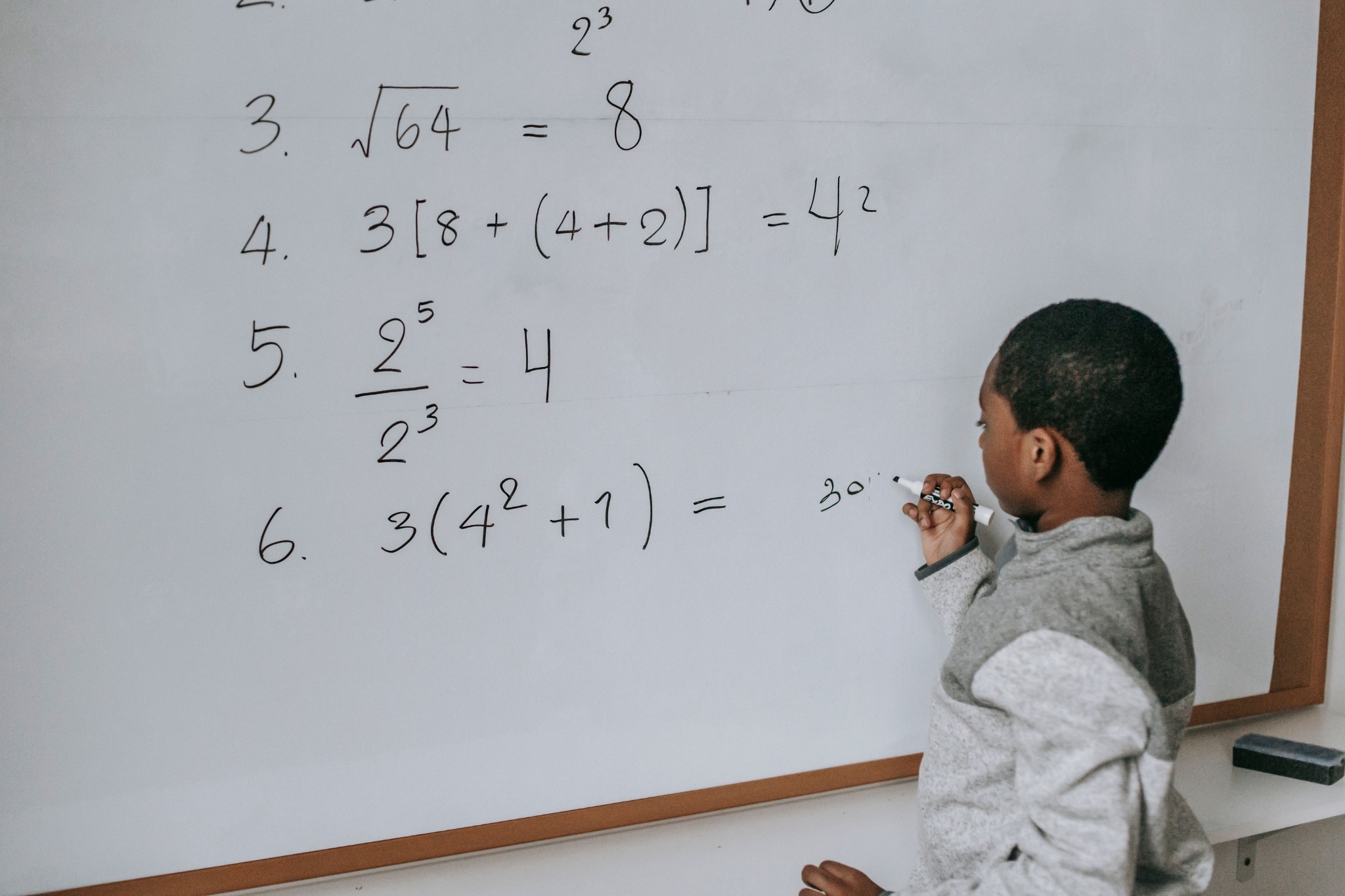
Now imagine that same child sitting down to take a math test. They miss several questions, see a disappointing grade, and suddenly declare, "I'm just bad at math!"
What's the difference? Why does failure in one environment encourage persistence while failure in another can destroy confidence?
I believe one of the greatest lessons we can learn from educational gaming is that failure doesn't have to be the end of learning. Sometimes, it's where real learning begins.
For homeschooling parents and educators, understanding this distinction can completely change how we approach mistakes, testing, and academic challenges.
I Was Afraid of Failing, Too
I understand this problem because I experienced it throughout my education. When I was in high school, I wanted to succeed. I wasn't deliberately trying to earn poor grades, and I certainly didn't enjoy disappointing my teachers or parents. But I struggled with something that made school especially difficult: test anxiety.
I remember worrying about whether I would remember everything I had studied. What if I forgot something important? What if I misunderstood the question? What if I failed? Sometimes, the fear of getti
ng something wrong seemed almost as overwhelming as the material itself.
The frustrating part was that I could study for a test, understand much of the information, and still struggle when it came time to demonstrate what I knew. A test wasn't simply an opportunity to show what I had learned. In my mind, it could become a judgment of whether I was smart enough.
That is a terrible position for a student to be in, especially when they're genuinely trying.
Looking back, I wish someone had helped me see mistakes differently. I wish testing had felt more like solving a puzzle or playing a challenging game, where getting something wrong simply meant I needed to try another strategy.
Because that's exactly what successful gamers learn to do.
The Science of Productive Failure
Educational researchers have explored an idea called productive failure, particularly through the work of learning scientist Manu Kapur. The principle is that students can benefit from attempting challenging problems before receiving complete instruction, even when their initial solutions are unsuccessful.
When appropriately designed, these experiences encourage students to explore possibilities, recognize gaps in their understanding, and become better prepared to learn from subsequent explanations.
But there's an important distinction: failure by itself isn't automatically educational.
A student who repeatedly fails without guidance may simply become discouraged. Productive failure works best when students receive meaningful feedback, opportunities to reflect, appropriate support, and another chance to succeed.
Games often create this cycle naturally. Players attempt a challenge, discover what doesn't work, receive feedback, adjust their approach, and try again. The consequences of failure are usually temporary, and the next opportunity is often only seconds away.
Imagine bringing that same philosophy into homeschooling. Instead of treating a wrong answer as evidence that a student doesn't understand anything, we treat it as information about what they need to practice next.
The mistake becomes feedback, not a verdict.
Growth Mindset: Teaching Children That Abilities Can Develop
Psychologist Carol Dweck's research on growth of the mindset has helped popularize an important educational distinction. Students with a growth-oriented view recognize that abilities can develop through effective strategies, practice, feedback, and support, rather than believing intelligence is permanently fixed.
Growth mindset isn't simply telling children, "You can do anything if you try hard enough." Effort matters, but so do good strategies, instruction, resources, and knowing when to ask for help.
Consider how differently a parent might respond to a struggling student.
Instead of saying, "You're not very good at fractions," try asking, "Which part of this problem is confusing? Let's find another way to solve it."
Instead of saying, "You failed the test," ask, "What did this test tell us about what we should practice next?"
And instead of praising only the final grade, recognize the student's willingness to investigate mistakes, revise an approach, and improve.
These small changes help children understand that struggling with something today doesn't mean they are incapable of understanding it tomorrow.

Turn Your Homeschool into a Place Where Mistakes Are Welcome
One advantage homeschooling families have is the ability to change the atmosphere around learning. We don't always have to follow a rigid testing schedule or move to the next chapter simply because the calendar says so.
We can give students opportunities to experiment, make mistakes, ask questions, and demonstrate improvement.
Here are five practical ways to make failure a productive part of your homeschool:
- Make the first attempt a practice round. Before grading an assignment, let students attempt a few problems without pressure. Explain that the purpose is to discover what they already know and what still needs work.
- Celebrate the correction. When a student fixes a mistake, recognize the reasoning that helped them get there. Correcting an error can be more educational than guessing correctly on the first attempt.
- Turn review into a game. Use trivia, puzzles, timed challenges, board games, or friendly competitions to practice difficult material. Keep the stakes low enough that students feel comfortable participating.
- Let children teach you what went wrong. Ask them to explain why an answer was incorrect and what they would do differently. Explaining mistakes encourages reflection and helps reveal whether they understand the underlying concept.
- Share your own failures. Tell your children about mistakes you've made in school, business, parenting, or everyday life. Show them how you responded and what you learned.
I especially like that last idea because children need to understand that adults don't succeed at everything the first time either. Entrepreneurs develop products that don't work. Scientists conduct experiments that contradict their predictions. Engineers redesign inventions. Even accomplished professionals make mistakes.
The difference is what they do afterward.
What If Tests Felt More Like Games?
Think about what happens when a student plays a trivia game with family members. They answer a question incorrectly, hear the correct answer, laugh, and move on to the next question. Later, when that question appears again, they may remember the answer because of the experience.
Compare that with receiving a graded test covered in red marks. The information may be similar, but the emotional experience can be completely different.
This doesn't mean every academic assessment should become a competition or that traditional tests should disappear. Students still need opportunities to demonstrate independent understanding, including in situations where grades or certifications matter.
However, we can separate the process of learning from the pressure of constantly being evaluated.
Low-stakes quizzes, games, and retrieval practice can help students identify weaknesses before a formal test. Research on retrieval practice also shows that recalling information can strengthen long-term memory, particularly when students receive useful feedback.
For children who experience test anxiety, this approach may help make assessment feel more familiar and manageable. It isn't a guaranteed solution to anxiety, but it can create additional opportunities
to practice demonstrating knowledge without every mistake carrying serious consequences.
And that's something I would have appreciated when I was younger.

Xogos Gaming and Lightning Round: Turning Testing Into an Adventure
This philosophy is one of the reasons we're developing educational experiences through Xogos Gaming, including our game Lightning Round.
Lightning Round is designed to make reviewing and testing knowledge feel more like playing a game than sitting through another traditional examination. I like to think of it as a form of stealth testing: students are answering questions and demonstrating what they know, but they're doing it through an entertaining, interactive experience.
Students can use pre-test quizzes to discover what they already understand before beginning a lesson. They can then practice and return to challenges to see how much they've improved. They can also compete against classmates, siblings, parents, or other family members, turning review into a friendly competition.
Imagine studying the American Revolution as a family and then challenging everyone to a Lightning Round competition. Mom answers a question about George Washington. Dad gets one about the Declaration of Independence. Your student misses a question about the Battle of Saratoga, learns the answer, and is ready to try again.
Suddenly, testing isn't necessarily something to dread. It becomes an opportunity to play, practice, compete, and improve.
Of course, the educational value comes from more than just having fun. Students still need accurate explanations, opportunities to review incorrect answers, and repeated practice. The game is the vehicle that helps make those learning experiences more engaging.
You can explore Xogos Gaming at www.XogosGaming.com and Lightning Round at www.LightningRound.rocks.
When I think back to my own struggles with test anxiety, I wonder how differently I might have approached school if more of my learning had involved challenges where I could fail, receive feedback, and immediately try again without feeling that every wrong answer defined me.
That's what I want more students to experience.
Failure isn't the opposite of learning. When we give students the right support and opportunities to try again, failure can become one of the most valuable steps toward success.
And perhaps the greatest lesson we can teach our children isn't how to avoid making mistakes.
It's how to become the kind of person who isn't afraid to learn from them.